How to Choose the Right Scent for Your Pet After Grooming
How to Choose the Right Scent for Your Pet After Grooming
There is nothing quite like that moment when your furry companion returns from a professional spa day. You open the door, and instead of the usual “doggy” smell or the faint scent of kitty litter, you are greeted by a cloud of fresh lavender, sweet vanilla, or perhaps a hint of tropical coconut. It is a sensory delight that signals cleanliness and care. However, have you ever stopped to wonder if your pet enjoys that fragrance as much as you do? Learning how to choose the right scent for your pet after grooming is not just about your olfactory preferences; it is an art that balances aesthetics, pet health, and the incredible complexity of an animal’s sense of smell.
Let’s be honest, we all want our pets to smell amazing. When they hop onto the sofa or cuddle up next to us in bed, a pleasant aroma makes the experience even better. But for a dog or a cat, scent is their primary way of navigating the world. While we see the world in high definition, they smell it in 4K. Choosing a post-grooming fragrance requires a thoughtful approach to ensure that the perfume or cologne enhances their well-being rather than causing them distress. In this guide, we will dive deep into the nuances of pet fragrances, safety considerations, and how to find that perfect “signature scent” for your four-legged friend.
Understanding the Importance of Scent in the Grooming Experience
When we talk about pet hygiene, we often focus on the haircut, the nail clipping, and the de-shedding. But the final spritz—the finishing touch—is what lingers long after the appointment is over. For many owners in busy urban environments, such as those utilizing mobile pet grooming in Dubai, the convenience of a fresh-smelling pet is a top priority. A high-quality scent serves as the “cherry on top” of a professional service, signifying that the pet is not just clean, but pampered.
However, scent serves a dual purpose. Beyond just smelling good to humans, certain scents can have an aromatherapy effect on pets. Just as we use eucalyptus to clear our heads or chamomile to relax, specific essential oils and pet-safe fragrances can help soothe a nervous dog or calm a high-strung cat. When you are figuring out how to choose the right scent for your pet after grooming, you are essentially choosing the mood you want to set for your pet’s post-bath relaxation.
The Science of a Pet’s Nose
Before you pick out a bottle of “Puppy Rose Water,” it is vital to understand that a dog’s sense of smell is anywhere from 10,000 to 100,000 times more acute than ours. While we have about 6 million olfactory receptors, a dog has up to 300 million. Cats are also incredibly sensitive, relying on their scent glands to communicate and mark their territory. This is why a scent that seems “subtle” to you might feel like a sensory explosion to them.
If a fragrance is too strong or contains harsh chemicals, a pet might try to rub it off immediately. Have you ever noticed your dog rolling in the grass right after a bath? They are often trying to reclaim their natural “identity” or mask a scent they find overwhelming. Therefore, the key to how to choose the right scent for your pet after grooming lies in moderation and quality. You want a scent that whispers, rather than one that screams.
Natural vs. Synthetic Fragrances
When browsing through grooming products, you will notice a divide between natural essential oils and synthetic perfumes. Synthetic fragrances are often engineered to last longer, which might seem like a benefit. However, they can sometimes contain phthalates or alcohols that dry out a pet’s skin. On the other hand, natural extracts derived from plants, fruits, and herbs are generally gentler, provided they are diluted correctly for animal use. If your pet has sensitive skin, always opt for hypoallergenic, water-based scents.
Matching Scents to Your Pet’s Personality
Just as humans choose perfumes that reflect their character, you can choose a grooming scent that matches your pet’s “vibe.” Is your dog a bouncy, energetic Golden Retriever who loves the outdoors? Or is your cat a sophisticated, quiet indoor dweller? The right aroma can complement their natural disposition.
For the energetic and playful pet, citrus-based scents like orange, lemon, or grapefruit are fantastic. These are uplifting and “bright,” matching a high-energy personality. For the pampered lap dog or the elegant feline receiving cat grooming services, softer notes like jasmine, rose, or light vanilla work beautifully. These scents feel luxurious and calming, perfect for a pet that enjoys a more relaxed pace of life.
The Calming Power of Lavender and Chamomile
If your pet finds the grooming process a bit stressful, the choice of scent becomes even more strategic. Lavender is perhaps the most well-known calming scent in both the human and animal worlds. When thinking about how to choose the right scent for your pet after grooming, consider lavender if your pet tends to be anxious. It can help lower their heart rate and promote a sense of peace once they are back in their home environment. Similarly, chamomile is gentle and soothing, making it ideal for senior pets or those with sensitive dispositions.
Seasonal Scent Selection: A Fun Way to Switch Things Up
Why stick to one scent all year round? Many professional groomers, like those working in a dog grooming van in Dubai, offer seasonal options that reflect the time of year. Switching scents with the seasons is a delightful way to keep the grooming experience fresh and exciting for the owner.
In the spring, think of fresh-cut grass, lilies, or light floral bouquets. These scents mirror the renewal of nature. During the hot summer months, tropical scents like coconut, pineapple, or sea breeze are incredibly popular. They provide a refreshing, “beachy” feel that masks the smell of summer sweat and humidity. As we move into autumn, warmer notes like sandalwood, cedarwood, or even a hint of spiced apple can feel cozy. Finally, for the winter holidays, many owners opt for vanilla, peppermint, or cinnamon-inspired scents that make their pets smell like a festive treat.
Safety First: Ingredients to Avoid
When you are learning how to choose the right scent for your pet after grooming, safety must be your top priority. Not all pleasant smells are safe for animals. For example, some essential oils that are beneficial for humans—such as tea tree oil, peppermint (in high concentrations), and cinnamon oil—can be toxic to cats and dogs if not handled by professionals. This is why it is always better to trust a professional service rather than using human perfumes on your pet.
Avoid any products that contain high levels of alcohol, as these can sting the skin and cause dryness or itching. Look for “paraben-free” and “non-toxic” labels. If your pet starts sneezing, coughing, or excessively scratching after a grooming session, the scent might be the culprit. In such cases, it is best to stick to fragrance-free options or very mild, hypoallergenic hydrosols. Missmeow Grooming always prioritizes the safety and comfort of the animals they serve, ensuring that every product used is pet-approved and gentle on the coat.
How the Environment Affects the Choice of Scent
The climate you live in plays a surprising role in how a fragrance behaves. In a dry, air-conditioned environment, scents tend to dissipate more quickly. In a humid climate, scents can become heavier and more pronounced. If you live in a place where your pet spends a lot of time outdoors, you might want a scent with deodorizing properties, such as eucalyptus or lemongrass, which can also act as a natural (though mild) insect repellent.
On the other hand, if your pet is purely an indoor companion, you might prefer a subtle “fresh laundry” or “baby powder” scent that doesn’t overwhelm the living room. When you look at Miss Meow pricing and packages, you will often find that high-quality finishing sprays are included as part of the premium grooming experience, tailored to the specific needs of your pet and your living situation.
How to Choose the Right Scent for Your Pet After Grooming: The Step-by-Step Process
If you are feeling overwhelmed by the options, follow this simple process to find the perfect match:
Step 1: Identify Your Pet’s Skin Type
Does your pet have dry, flaky skin? Or are they prone to oiliness? Pets with skin issues should avoid heavy fragrances. Opt for oatmeal-based or aloe-infused scents that offer healing properties alongside a pleasant aroma.
Step 2: Observe Your Pet’s Reaction
Before committing to a scent, let your pet “test” it if possible. Most professional groomers will have a few options. If your pet turns their head away or sneezes when they smell a certain sample, that’s a clear “no” from them. If they remain neutral or curious, you’ve likely found a winner.
Step 3: Consider the Longevity
How long do you want the scent to last? Some water-based mists provide a quick burst of fragrance that fades within a day, while oil-based serums might linger for a week. If you have a particularly “smelly” breed, like a Basset Hound or a Cocker Spaniel, you might want a slightly more durable scent.
Step 4: Align with Your Own Preferences
Since you are the one living with the pet, you should enjoy the smell! If you have a migraine sensitivity to floral scents, steer clear of rose or lily. If you love the smell of the spa, look for eucalyptus or green tea notes.
The Role of Professional Groomers in Choosing Scents
Professional groomers are a wealth of knowledge when it comes to pet-safe fragrances. They see hundreds of pets and know which scents tend to be well-received and which ones cause reactions. When you book a pet grooming appointment, don’t be afraid to ask the groomer for their recommendation. They can often suggest a scent that complements the specific shampoo used during the bath.
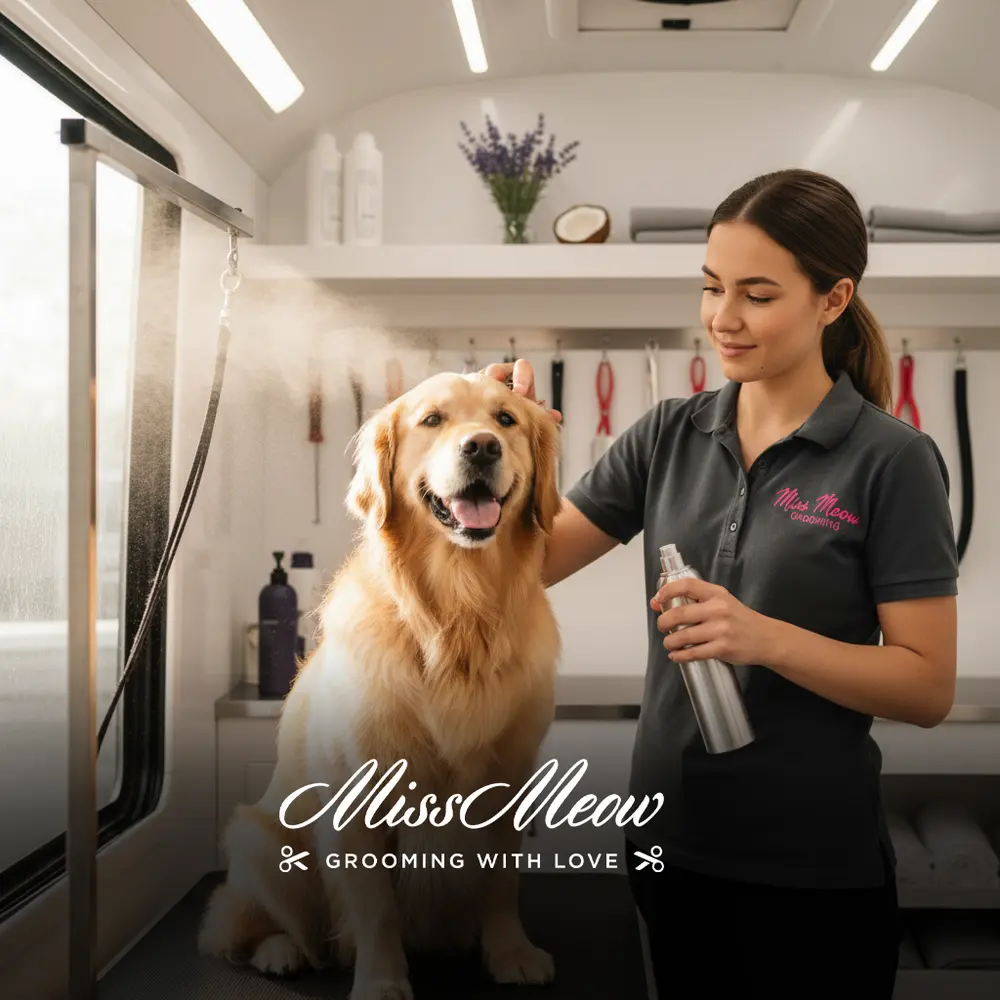
A professional will also know how to apply the scent correctly. It should never be sprayed directly into the face, eyes, or ears. Instead, it is usually misted over the back and tail area or sprayed onto a brush and then worked through the fur. This ensures an even distribution that isn’t overwhelming for the pet’s sensitive nose.
Common Scents and Their Benefits
To help you decide how to choose the right scent for your pet after grooming, here is a quick breakdown of popular options and what they offer:
- Vanilla: Warm, comforting, and generally well-liked by humans. It provides a “clean” but cozy aroma.
- Coconut: Great for summer; often reminds owners of a tropical vacation. It is also very effective at masking “wet dog” smells.
- Sandalwood: An earthy, grounding scent that is perfect for male dogs or for owners who prefer less sweet aromas.
- Jasmine/Neroli: High-end, sophisticated floral scents that make a pet feel like they’ve just stepped out of a luxury boutique.
- Green Tea: Fresh, crisp, and clean. It’s a neutral scent that isn’t overly feminine or masculine.
How to Choose the Right Scent for Your Pet After Grooming for Special Occasions
Is it your dog’s birthday? Are you taking your cat to a pet-friendly family gathering? Special occasions call for a special scent. Many groomers offer “luxe” scents for these moments—think gold-leaf infused mists or scents inspired by famous human perfumes (but formulated specifically for animal safety). Choosing a “signature scent” for birthdays or holidays makes the occasion feel even more memorable.
However, always remember that even on special days, your pet’s comfort comes first. If the party is going to be loud and crowded, sticking to a calming lavender scent might be better than a flashy, strong perfume. It helps them stay grounded amidst the excitement.
The Connection Between Nutrition and Pet Odor
While we are focusing on how to choose the right scent for your pet after grooming, it is important to mention that the “base” smell of your pet is largely determined by their diet and health. A pet with a high-quality diet will generally have a healthier coat and less “funky” skin odors. If your pet consistently has a strong, unpleasant smell even after grooming, it might be worth discussing their nutrition or dental health with a veterinarian. A good scent should enhance a clean pet, not mask an underlying health issue.
Maintaining the Scent at Home
Once you’ve found that perfect scent, you probably want it to last as long as possible. Between professional grooming sessions, you can use pet-safe deodorizing wipes or a light refresh mist. Just be sure to use the same scent family. Mixing a “tropical coconut” shampoo with a “floral rose” home spray can result in a confusing and potentially unpleasant olfactory cocktail.
Also, keep your pet’s bedding clean. Much of the “pet smell” we notice in our homes comes from the oils and hair left on their favorite sleeping spots. By keeping the environment fresh, the beautiful scent from the groomer will stand out much more clearly.
Conclusion: A Happy, Fragrant Friend
Choosing the right scent is a small but significant way to show love to your pet and improve your shared living environment. By considering their sensitivity, their personality, and the quality of the ingredients, you can turn a routine grooming session into a truly therapeutic experience. Whether you prefer the calming notes of a lavender field or the refreshing zing of a citrus orchard, the goal is always the same: a happy, healthy, and great-smelling pet.
So, the next time you think about how to choose the right scent for your pet after grooming, take a moment to consider the options. Talk to your professional groomer, observe your pet’s reactions, and don’t be afraid to experiment with the seasons. After all, your pet is a member of the family, and they deserve to smell just as wonderful as they make you feel every single day.

