Understanding Dog Tear Stains and How to Remove Them
Understanding Dog Tear Stains and How to Remove Them
Have you ever looked into your dog’s soulful eyes, only to find yourself distracted by those stubborn, reddish-brown streaks running down their face? If you own a light-colored breed, such as a Maltese, Poodle, or Bichon Frise, you are likely all too familiar with this aesthetic struggle. These marks, commonly known as tear stains, can be quite frustrating for pet owners who want their companions to look as clean and healthy as possible. However, Understanding Dog Tear Stains and How to Remove Them is about more than just a sparkling white coat; it is often a window into your dog’s overall health and well-being. Let’s be honest, we all want our furry friends to feel their best, and sometimes those stains are telling us a story that we need to listen to.
While many people assume that tear staining is just a natural part of being a dog, the reality is a bit more complex. These stains are caused by an overflow of tears from the eyes onto the facial fur. When this moisture sits on the hair for extended periods, it becomes a breeding ground for bacteria and yeast, leading to that distinct discoloration. In this comprehensive guide, we will dive deep into the biological causes, environmental triggers, and the most effective ways to restore your pup’s bright-eyed look. Whether you are dealing with a mild case or a chronic issue, gaining a thorough Understanding Dog Tear Stains and How to Remove Them will empower you to take the best care of your canine companion.
What Exactly Are These Stains? Understanding Dog Tear Stains and How to Remove Them
To solve a problem, one must first understand its origin. The reddish-brown tint you see on your dog’s face is typically caused by porphyrins. These are iron-containing molecules produced when the body breaks down iron. Porphyrins are excreted through bile and the intestinal tract, but in dogs, a significant amount is also excreted through tears, saliva, and urine. When these tears sit on light-colored fur, the iron in the porphyrins oxidizes upon contact with light and air, leaving behind that rusty mark. It is a process not too different from how a penny turns green or how a piece of iron rusts in the rain.
However, if the stains are more brownish and have a slight odor, you might be dealing with a secondary yeast infection known as Ptyrosporin or “red yeast.” This happens because the constant moisture on the face creates a perfect, warm environment for fungus to thrive. Distinguishing between a simple chemical stain and a fungal issue is the first step in Understanding Dog Tear Stains and How to Remove Them. While a professional mobile pet grooming in Dubai can help clean the surface area, addressing the underlying moisture is crucial for long-term success. It is also worth noting that while we focus heavily on dogs, feline owners often face similar issues, frequently seeking cat grooming services to manage facial staining in breeds like Persians or Exotics.
The Core Causes: Why Does Tearing Happen?
Why do some dogs seem to have “leaky” eyes while others stay perfectly dry? There are several physiological and environmental factors at play. One of the most common reasons is the shape of the dog’s head and eyes. Brachycephalic breeds—those with short muzzles and flat faces—often have shallow eye sockets. This structure prevents tears from draining properly through the nasolacrimal ducts, causing them to spill over onto the face. Paradoxically, dogs with very large, prominent eyes can also suffer from this, as the eyes are more exposed to wind and dust, triggering excess tear production as a protective mechanism.
Another common culprit is blocked tear ducts. Just like a clogged drain in your sink, if the tiny tubes meant to carry tears away are narrowed or obstructed by debris or inflammation, the liquid has nowhere to go but down the cheeks. Allergies also play a massive role. In fact, many dogs experience seasonal allergies just like humans do. Pollen, dust, or even certain household cleaners can irritate the ocular surface. When we talk about Understanding Dog Tear Stains and How to Remove Them, we must look at the environment. Is the air in your home dry? Is there a lot of dust? Even the quality of the water your dog drinks can contribute to the severity of the stains, as high mineral content in tap water can increase porphyrin levels.
Dietary Influences and Water Quality
Let’s talk about what goes into your dog’s bowl. Many pet owners are surprised to learn that diet is a major factor in tear production. Low-quality commercial dog foods often contain artificial colors, preservatives, and fillers that can cause systemic inflammation or allergic reactions, which manifest as excessive tearing. Switching to a high-quality, grain-free, or limited-ingredient diet can sometimes work wonders. Furthermore, the type of bowl you use matters. Plastic bowls are porous and can harbor bacteria that irritate your dog’s face every time they eat or drink. Switching to stainless steel or ceramic can make a world of difference.
Water quality is another hidden factor. If you live in an area with “hard” water, your dog is ingesting a high concentration of minerals. These minerals find their way into the tears and exacerbate the staining. Many veterinarians suggest using filtered or distilled water to reduce the mineral load. This simple change is often a cornerstone in Understanding Dog Tear Stains and How to Remove Them without resorting to harsh chemicals or antibiotics.
Practical Strategies: Understanding Dog Tear Stains and How to Remove Them Safely
Now that we understand the “why,” let’s get into the “how.” Removing existing stains requires a two-pronged approach: cleaning the current discoloration and preventing new moisture from accumulating. It is important to be extremely careful when working around the eyes. You should never use bleach, high-strength hydrogen peroxide, or any product not specifically designed for canine ocular use. These can cause permanent damage to your dog’s vision or cause painful chemical burns.
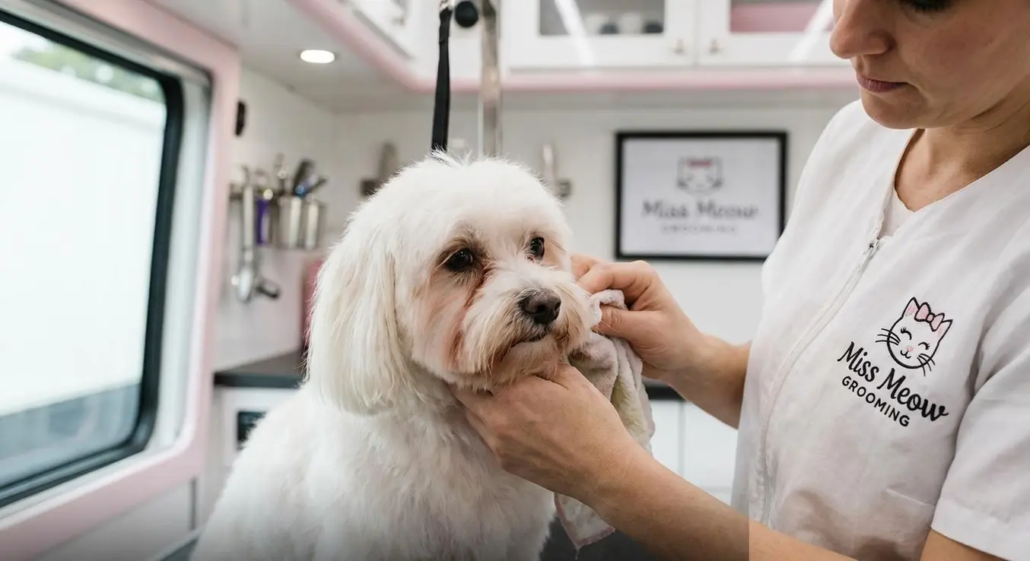
For a gentle home remedy, many owners use a soft cloth dipped in a mixture of warm water and a tiny bit of mild, tearless baby shampoo. Wiping the area twice a day helps keep the fur dry and removes the porphyrins before they have a chance to oxidize. There are also many over-the-counter wipes and solutions specifically formulated for this purpose. However, for deep-set stains or for dogs who are particularly wiggly, seeking professional help is often the best route. Utilizing a dog grooming van in Dubai ensures that your pet is handled by experts who have the right tools and products to safely lighten the fur without causing irritation.
Home Remedies vs. Commercial Products
If you search the internet, you will find a million “hacks” for tear stains. Some suggest adding a teaspoon of apple cider vinegar to your dog’s water to change the pH levels, while others swear by probiotics. While these can be effective for some, they aren’t a universal cure. On the other hand, commercial tear stain removers often contain mild surfactants that break down the protein and iron bonds in the hair. When choosing a product, always read the labels. Look for natural ingredients like chamomile or aloe vera which soothe the skin while cleaning the fur.
Missmeow Grooming advocates for a holistic approach, combining regular hygiene with high-quality products that respect the sensitive nature of the eye area. Sometimes, the most effective “removal” method is simply keeping the hair around the eyes trimmed short. When the hair is short, there is less surface area for the tears to cling to, and the area stays much drier. This is why regular professional maintenance is so highly recommended for breeds prone to staining.
When to See a Veterinarian
While Understanding Dog Tear Stains and How to Remove Them is usually a grooming concern, there are times when it indicates a medical emergency. If you notice that your dog’s eyes are red, cloudy, or if they are squinting and pawing at their face, this is not just a stain—it’s a sign of pain or infection. Corneal ulcers, ingrown eyelashes (distichiasis), or ear infections can all cause the eyes to water excessively. In these cases, no amount of cleaning will solve the problem until the underlying medical issue is addressed by a professional vet.
Furthermore, if the discharge changes from clear to yellow or green, it is a clear indicator of a bacterial infection. Always prioritize your dog’s health over their appearance. Once the vet gives your pet a clean bill of health, you can then return your focus to the aesthetic side of Understanding Dog Tear Stains and How to Remove Them. It is all about balance and ensuring your dog is comfortable in their own skin.
The Role of Professional Grooming
Let’s be honest: keeping up with a white dog’s facial hygiene can feel like a full-time job. Between the daily wiping, the diet monitoring, and the hair trimming, it can be overwhelming. This is where professional services become a lifesaver. A professional groomer doesn’t just “cut hair”; they provide a comprehensive health check. They can pluck excess hair from the ear canals (which can reduce eye-watering) and use specialized whitening shampoos that are safe for the face.
If you are curious about the costs associated with these specialized treatments, looking into Miss Meow pricing and packages can provide clarity. Having a professional come to your door significantly reduces the stress for both the pet and the owner. A calm dog is much easier to groom around the eyes than one who is stressed in a busy salon environment. When the groomer arrives, you can discuss your specific concerns regarding Understanding Dog Tear Stains and How to Remove Them, and they can tailor their approach to your dog’s specific coat type and sensitivity level.
A Step-by-Step Maintenance Routine
Consistency is the secret ingredient. You cannot expect the stains to disappear overnight if they have been building up for months. Here is a simple, effective routine you can implement today:
1. The Daily Wipe-Down
Every morning and evening, use a damp, lint-free cloth or a dedicated eye wipe to gently clean the area under the eyes. This prevents the “crusties” from forming and keeps the porphyrins from setting into the hair shaft. Make sure to pat the area dry afterward, as moisture is the enemy.
2. Proper Hydration
Switch your dog to filtered water immediately. This is perhaps the easiest step in Understanding Dog Tear Stains and How to Remove Them. By reducing the intake of iron and magnesium, you are directly impacting the chemical composition of their tears.
3. Trim the “Danger Zone”
Use blunt-nosed safety scissors to carefully trim any long hairs that are poking into the eye or hanging low enough to soak up tears. If you aren’t comfortable doing this yourself, it’s a great reason to book a pet grooming appointment and have an expert handle the delicate work.
4. Monitor the Diet
Keep a food diary. If you notice the staining gets worse after a certain treat or a new brand of kibble, you may have identified an allergen. Many owners find that moving away from chicken-based diets to “novel proteins” like lamb or fish helps reduce systemic inflammation and eye discharge.
Understanding Dog Tear Stains and How to Remove Them: Final Thoughts
At the end of the day, our dogs don’t care if they have rusty streaks on their faces. They love us unconditionally regardless of how they look. However, as responsible owners, we know that these stains are often the result of environmental factors or physiological needs that we can address. By investing the time in Understanding Dog Tear Stains and How to Remove Them, you are improving your dog’s quality of life, preventing potential skin infections, and keeping them looking their best for all those photos you undoubtedly take.
Remember that every dog is an individual. What works for a neighbor’s Maltese might not work for your Cocker Spaniel. It takes a bit of patience and experimentation to find the right combination of diet, water, and grooming habits. Don’t get discouraged if the stains don’t vanish instantly. The fur that is already stained will likely need to grow out and be trimmed away; your goal is to ensure that the new hair growing in stays white and clean.
By staying proactive and incorporating professional grooming into your routine, you can win the battle against tear stains. Whether it’s through careful home care or the convenience of a professional service, your pup’s bright, clear eyes are worth the effort. After all, those eyes are the windows to their happy, wagging souls, and they deserve to shine as brightly as possible. Armed with the right knowledge on Understanding Dog Tear Stains and How to Remove Them, you are now ready to tackle those stubborn marks and enjoy a cleaner, happier dog.

