
What to Do If Your Pet Gets Skunked or Smells Bad
It is a scenario that every pet owner dreads. You let your dog out into the yard for a final bathroom break before bed, or perhaps you are enjoying a peaceful evening hike, when suddenly, a familiar, pungent, and overwhelming stench fills the air. It is unmistakable. It is chemical, sulfurous, and seemingly permanent. Your heart sinks as your furry friend trots back toward you, looking slightly confused but smelling like a biological weapon. Knowing what to do if your pet gets skunked or smells bad in that exact moment can make the difference between a minor localized disaster and a house that smells like a swamp for the next six months.
Dealing with a skunked pet is more than just a nuisance; it is an emergency of the olfactory kind. However, the panic that sets in often leads owners to make critical mistakes, like bringing the dog inside immediately or dousing them in water, which can actually set the smell deeper into the fur. In this comprehensive guide, we will explore the chemistry of the spray, the immediate steps you must take, and the proven methods to restore your pet’s coat to its former glory. Beyond the skunk encounter, we will also dive into the broader question of what to do if your pet gets skunked or smells bad due to other common hygiene issues, from skin infections to the classic “wet dog” aroma.
The Biology of the Stench: Why Skunk Spray is So Powerful
Before we jump into the solutions, it helps to understand what you are actually fighting. Skunk spray is not just a liquid; it is an oily secretion produced by the anal glands of the skunk. This oil contains organic compounds called thiols (specifically n-butyl mercaptan), which contain sulfur. If you have ever smelled a gas leak, you are smelling a similar sulfur-based compound added to natural gas to make it detectable. These thiols are incredibly potent and have an evolutionary purpose: to be so offensive that even a hungry bear would think twice about attacking.
The real problem is that these oils are hydrophobic, meaning they do not dissolve in water. If you simply spray your dog with a hose, you aren’t washing the oil away; you are actually helping the oil spread further across the coat and deep into the skin. Furthermore, skunk spray contains “thioacetates,” which are dormant smell-bombs. When these compounds get wet, they slowly convert back into stinky thiols. This is why a dog might smell fine while dry but suddenly reeks of skunk weeks later the moment they get caught in the rain. To truly solve the problem, you need chemistry, not just a bucket of soapy water.
Immediate Action: What to Do If Your Pet Gets Skunked or Smells Bad
The very first rule of thumb is: stay outside. If you bring a skunked pet into your home, the oils will transfer to your carpets, your furniture, and your clothing within seconds. If you absolutely must bring them inside, confine them to a laundry room or a bathroom with a tiled floor, and do not let them rub against anything. Let’s be honest, trying to keep a panicked dog from rubbing their face on the sofa is a losing battle, so outdoor containment is your best friend.
Once you have secured the perimeter, check your pet’s eyes. Skunk spray is highly irritating and can cause temporary blindness or severe redness. If their eyes are watering or they are pawing at them, flush them gently with cool water or a saline solution designed for pets. This is the only part of the “What to Do If Your Pet Gets Skunked or Smells Bad” process where plain water is actually the primary hero. Once the eyes are clear, you can focus on the coat.
The Tomato Juice Myth
For decades, the go-to advice for a skunked dog was a bath in tomato juice. However, any professional groomer will tell you that this is largely a waste of time and a massive waste of canned tomatoes. Tomato juice does not neutralize the sulfur compounds; it merely masks them through a phenomenon called “olfactory fatigue.” Your nose gets so used to the smell of tomato juice that it stops picking up the skunk smell. To everyone else, your dog just smells like a skunk eating a bowl of pasta. Plus, if you have a white or light-colored dog, you now have a pinkish-orange, smelly pet. We can do better than this.
The Science-Backed De-Skunking Recipe
In the early 1990s, a chemist named Paul Krebaum developed a formula that changed the game for pet owners everywhere. This is the definitive answer to what to do if your pet gets skunked or smells bad. The formula uses oxygen to chemically alter the thiols, turning them into odorless sulfonates. Here is what you need:
- 1 quart of 3% Hydrogen Peroxide (fresh, unopened bottles work best)
- 1/4 cup of Baking Soda (Sodium Bicarbonate)
- 1 teaspoon of liquid dish soap (the kind used for hand-washing dishes, like Dawn)
Mix these ingredients in an open container. Do not—and I cannot stress this enough—mix them in a closed bottle or sprayer. The chemical reaction releases oxygen gas, which can cause a closed container to explode. While the mixture is still bubbling, apply it to your pet’s dry coat. Massage it deeply into the fur, making sure to reach the skin where the oils are trapped. Avoid the eyes and mouth. Let the solution sit for about 5 to 10 minutes, then rinse thoroughly. You might need to repeat this process twice for a direct hit. Since this requires significant effort and the right tools, many owners prefer to call in professional mobile pet grooming in Dubai to handle the messy cleanup at their doorstep.
What to Do If Your Pet Gets Skunked or Smells Bad: Common Mistakes
One of the most common errors is getting the pet wet before applying the neutralizing solution. Water closes the hair cuticle and makes it harder for the de-skunking mixture to penetrate the oil. Always apply your cleaning agent to a dry coat first. Additionally, do not save any leftover mixture. Once the reaction is done, it loses its potency and, as mentioned, becomes a pressurized hazard if bottled. Discard any unused portion safely.
Another mistake is neglecting the equipment. If your dog was wearing a collar or harness during the encounter, those items are likely saturated in oil. While you can try washing nylon collars, leather ones are almost impossible to save. The porous nature of leather absorbs the thiols so deeply that the smell may linger for years. Sometimes, it is better to just cut your losses and buy a new lead.
Beyond the Skunk: Dealing with General Bad Odors
Of course, skunks aren’t the only reason a pet might start to smell. In fact, most owners find themselves wondering what to do if your pet gets skunked or smells bad due to everyday occurrences like rolling in something “delicious” (from a dog’s perspective) or developing a medical issue. Cats, too, are not immune. While they are meticulous self-groomers, elderly or overweight cats may struggle to reach certain spots, leading to mats and unpleasant odors. In such cases, specialized cat grooming services can provide the deep cleaning they need to feel comfortable again.
The Case of the “Wet Dog” Smell
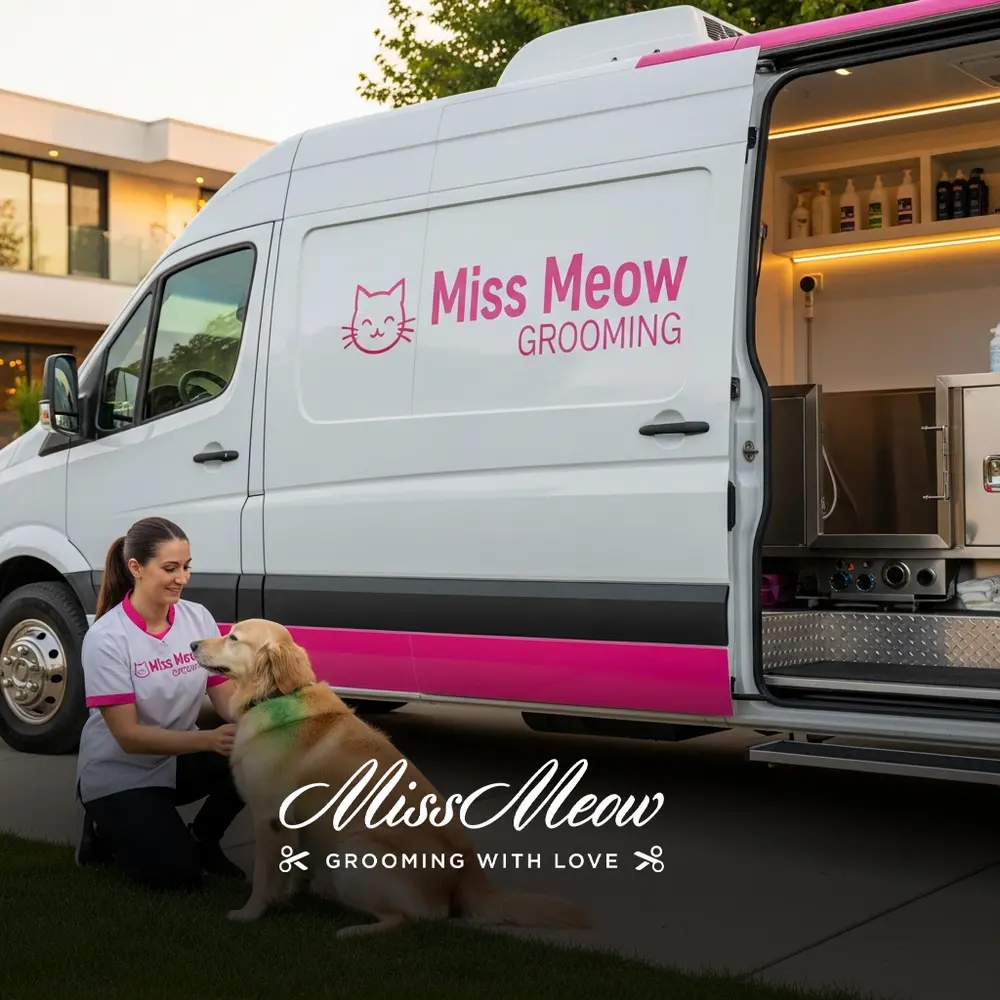
Why do dogs smell worse when they are wet? It is actually a biological process involving microorganisms like yeast and bacteria that live on the skin. These microbes produce waste products. When the dog gets wet, the water evaporates, carrying these organic compounds into the air and into your nostrils. This is why regular maintenance is so important. Using a professional dog grooming van in Dubai ensures that your dog is not just washed, but dried thoroughly with high-velocity dryers that remove the moisture trapped in the undercoat, preventing that “wet dog” funk from settling in.
Yeast and Bacterial Infections
If your pet has a persistent “corn chip” or “sweetly rotten” smell, it might not be dirt at all. Yeast infections in the ears or between the paw pads are incredibly common, especially in humid climates. These require more than just a bath; they often require medicated shampoos or veterinary intervention. If you notice your pet is constantly licking their paws or shaking their head, the smell is a symptom of an underlying health issue. Missmeow Grooming professionals are often the first to spot these signs during a routine bath, helping owners identify problems before they become severe.
When to Call the Professionals
Let’s be honest: not everyone is equipped to handle a skunked dog in their backyard at 10:00 PM. It is a messy, exhausting, and often nauseating process. If you find yourself overwhelmed, seeking professional help is a smart move. When looking at Miss Meow pricing and packages, you will find that a professional de-skunking treatment is a worthwhile investment. Professionals have access to industrial-grade degreasers and odor neutralizers that are much more effective than home remedies.
Moreover, professional groomers understand the nuances of different coat types. A thick-coated breed like a Husky or a Golden Retriever has layers of fur that can trap skunk oil for months if not treated correctly. A professional groomer can ensure that every inch of the undercoat is addressed, preventing the “re-stink” that happens the next time your dog gets damp.
Preventing Future Odor Mishaps
While you cannot always control when a skunk wanders into your path, there are ways to minimize the risk. Skunks are nocturnal and crepuscular, meaning they are most active at dawn and dusk. Keeping your yard well-lit and removing food sources like fallen fruit or unsealed trash cans can discourage skunks from visiting. If you are out for a walk, keep your dog on a leash, especially in areas with high brush or near woodpiles where skunks like to den.
For general smells, consistency is key. Regular brushing removes dead hair and dander, which are the primary food sources for odor-causing bacteria. It also helps distribute natural oils across the coat, keeping the skin healthy. On the other hand, over-bathing can strip those oils, leading to dry skin and even more odor as the body overcompensates. Finding a balance with a monthly grooming schedule is usually the sweet spot for most breeds.
Conclusion: Restoring the Peace (and the Freshness)
Knowing what to do if your pet gets skunked or smells bad is a vital part of being a responsible pet owner. Whether it’s the high-stakes chemistry of a skunk encounter or the routine maintenance of a smelly pup, the goal is always the same: a clean, happy pet and a fresh-smelling home. Remember to act fast, keep the water away initially, and use the right neutralizing agents. And when the job is too big to handle alone, don’t hesitate to book a pet grooming appointment to let the experts take over the heavy lifting.
Ultimately, a smelly pet is usually just a pet that has been having a bit too much fun. While a skunking is a nightmare in the moment, it becomes a story you’ll tell for years. By following these steps and maintaining a regular grooming routine, you can ensure that your pet’s presence is always a breath of fresh air, rather than a cause for holding your breath.