
Does My Short-Haired Cat Really Need a Groomer?
Does My Short-Haired Cat Really Need a Groomer?
We have all seen the photos of fluffy Persians or regal Maine Coons looking like little lions after a session with a professional. In those cases, the necessity is obvious; without intervention, those long, flowing coats would quickly transform into a matted, painful mess. But what about the sleek American Shorthair, the velvet-coated Russian Blue, or the energetic Siamese? If you are a parent to one of these low-maintenance breeds, you might find yourself asking: Does My Short-Haired Cat Really Need a Groomer? It is a valid question. After all, cats are famously fastidious, spending up to half of their waking hours licking themselves clean. However, there is a significant difference between a cat’s daily spit-polish and the comprehensive care that a professional can provide.
Let’s be honest, many of us assume that “short-haired” is synonymous with “zero-maintenance.” We see their shiny coats and assume that nature is doing all the heavy lifting. But beneath that short fur lies a complex system of skin, oil glands, and nails that require more attention than a simple tongue-bath can offer. In this deep dive, we will explore why professional intervention is not just for the “fluff-balls” of the feline world and why your short-haired companion might be secretly craving a spa day.
The Myth of the Self-Cleaning Cat
The idea that cats are “self-cleaning” is one of the most persistent myths in the pet world. While it is true that cats are incredibly hygienic, their grooming process is more about spreading natural oils and removing surface dirt than deep cleaning. A cat’s tongue is covered in tiny barbs called papillae, which act like a natural comb. While these are great for catching loose fur, they are also incredibly efficient at swallowing that fur. For a short-haired cat, this means all that “brushed” hair ends up in their stomach, leading to the dreaded midnight sound of a hacking hairball. Does My Short-Haired Cat Really Need a Groomer to prevent this? Absolutely. A professional can remove significantly more dead undercoat than a cat’s tongue or a standard home brush ever could.
Furthermore, cats don’t use soap. Saliva can actually build up over time, creating a layer of proteins that can trigger allergies in humans and leave the cat’s skin feeling less than fresh. Professional cat grooming services utilize feline-safe shampoos that break down these allergens and deep-clean the skin, which is especially important for indoor cats that might accumulate household dust and dander.
Does My Short-Haired Cat Really Need a Groomer for Shedding Control?
If you have ever worn a black shirt around a “non-shedding” short-haired cat, you know the truth: they shed, and they shed a lot. Short hairs are often stiffer and more prone to weaving themselves into the fabric of your sofa or your favorite rug. Many owners assume that because the hair is short, it doesn’t need “deshedding.” This is a misconception. Short-haired breeds often have very dense undercoats that cycle through growth phases just as quickly as long-haired ones.
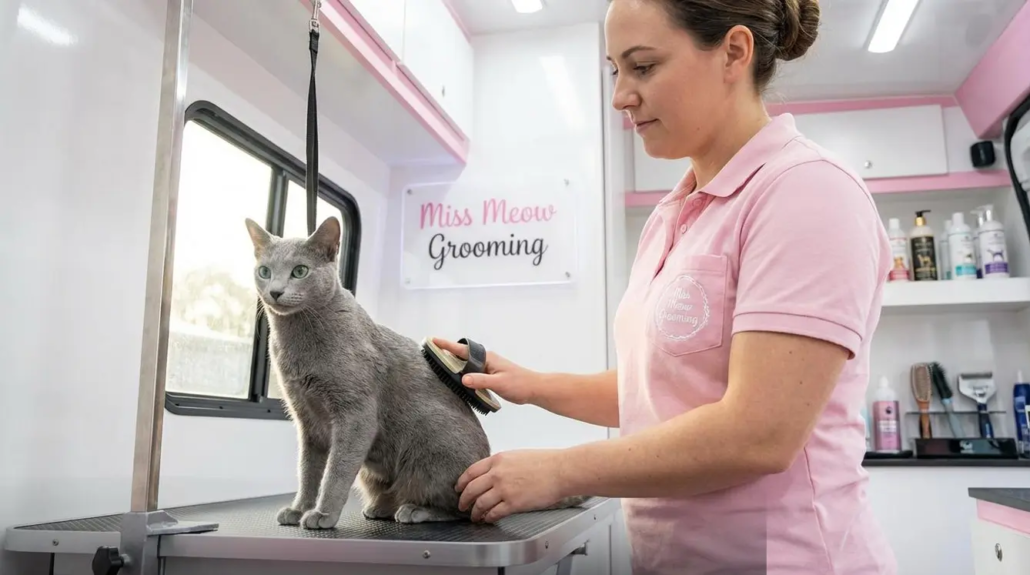
When you bring your cat to a professional, they use specialized tools—like rubber curry brushes and high-velocity dryers—that safely blow out the dead coat without irritating the skin. This process significantly reduces the amount of fur left on your furniture. In fact, many clients find that the convenience of mobile pet grooming in Dubai has changed the game for their home cleanliness. Instead of spending your weekends vacuuming, a regular professional session keeps the shedding at the source. It is not just about aesthetics; it is about managing the environment you both live in.
Skin Health and Early Detection
One of the most overlooked aspects of professional grooming is the “health check” component. Because groomers are handling every inch of your cat’s body, they are often the first to notice small changes that an owner might miss under the fur. Does My Short-Haired Cat Really Need a Groomer if their skin looks fine? You might be surprised. Cats are masters at hiding discomfort. A professional can spot flea dirt, skin tags, unusual lumps, or areas of inflammation that might indicate a food allergy or a dermatological issue.
At Missmeow Grooming, the focus isn’t just on the cut or the bath, but on the overall well-being of the feline. Short-haired cats are particularly prone to “stud tail” (overactive sebaceous glands) or feline acne on their chins. These conditions require specific medicated washes and techniques that are difficult to replicate at home without the right equipment. Regular sessions ensure that these minor issues don’t escalate into painful infections.
The Hard-to-Reach Places: Why Seniors and Overweight Cats Need Help
As cats age, they often develop arthritis or lose some of their youthful flexibility. Similarly, cats that are carrying a few extra pounds might find it physically impossible to reach certain areas, particularly the base of the tail and the lower back. When these areas are neglected, the fur can become greasy, flaky, and eventually matted—yes, even short hair can mat! This is often where the question “Does My Short-Haired Cat Really Need a Groomer?” becomes a matter of geriatric care.
A professional can provide a “sanitary trim” or a deep cleaning of those hard-to-reach spots, preventing skin infections and keeping the cat comfortable. For many owners, it is hard to see their feline friend struggling with mobility, and providing them with professional assistance is a way to maintain their dignity and comfort in their golden years. If you’re wondering about the cost of these specialized services, you can easily check the Miss Meow pricing and packages to find a solution that fits your cat’s specific needs.
Nail Care and Paw Pad Maintenance
Let’s talk about the claws. If your cat is an indoor-only resident, their nails don’t get the natural wear and tear that an outdoor cat’s would. Overgrown nails can curve back and grow into the paw pad, which is incredibly painful and requires veterinary intervention. While many owners attempt to clip nails at home, it often turns into a stressful wrestling match that ends in scratches for the human and trauma for the cat.
Professional groomers are trained in feline handling techniques that minimize stress. They can quickly and safely trim the nails and even check for “horn” growths or cracked pads. This is a standard part of most grooming packages. For households with multiple animals, you might even see the dog grooming van in Dubai serving your neighbors, reminding you that all pets, regardless of coat length or species, deserve that level of professional maintenance for their extremities.
Ear and Eye Hygiene: The Details That Matter
Short-haired cats, particularly certain breeds like the Devon Rex or the Sphynx (which technically has “peach fuzz”), can have significant earwax buildup. Even your standard domestic shorthair can accumulate debris in the folds of their ears, leading to ear mites or infections. A groomer will gently clean the ears with specialized solutions, ensuring they stay dry and healthy. Similarly, they can clear away the “eye gunk” that can stain the fur or cause irritation in breeds with slightly flatter faces.
These small details contribute to a much higher quality of life. When you ask, “Does My Short-Haired Cat Really Need a Groomer?” consider these intricate areas. It is about more than just the coat; it is about the eyes, the ears, and the paws. These are the parts of the cat that they simply cannot clean thoroughly on their own.
Reducing Stress Through Professional Handling
Many cat owners avoid the groomer because they fear it will be too stressful for their pet. It is a common concern—cats are creatures of habit and generally dislike being put in a carrier and driven across town. This is where the modern approach to grooming shines. By choosing a mobile service, the “scary” part of the journey is eliminated. The groomer comes to you, providing a quiet, one-on-one environment where your cat is the sole focus.
Professional groomers understand feline body language. They know when to pause, when to use a soothing tone, and how to hold a cat to make them feel secure rather than restrained. Over time, many short-haired cats actually come to enjoy the stimulation of the massage-like brushing and the warmth of the bath. If you have been hesitant, now is a great time to book a pet grooming appointment and see the difference a professional touch can make.
Does My Short-Haired Cat Really Need a Groomer? The Comparison
To put things into perspective, let’s compare the DIY approach versus the professional approach. At home, you might spend ten minutes with a supermarket brush, missing the undercoat and likely skipping the ears and nails because the cat gets grumpy. In a professional setting, the cat receives a high-quality bath to remove oils, a blow-dry to remove dead hair, a full nail trim, ear cleaning, and a thorough skin check.
The result? A cat that smells better, sheds less, and feels significantly lighter. On the other hand, a neglected short-haired coat can become oily, leading to “feline dandruff” and increased dander in your home. For those with slight allergies, the difference between a professionally groomed cat and a “self-cleaned” cat is night and day. So, Does My Short-Haired Cat Really Need a Groomer? When you look at the health, hygiene, and happiness factors, the answer leans heavily toward “Yes.”
Conclusion: A Proactive Approach to Feline Wellness
In conclusion, while short-haired cats may not require the daily detangling that long-haired breeds do, they are far from “maintenance-free.” Professional grooming is a vital component of a proactive pet health strategy. It addresses shedding, prevents painful nail issues, ensures skin health, and provides a level of cleanliness that a cat simply cannot achieve on their own. By incorporating regular grooming into your cat’s routine, you are not just pampering them; you are investing in their long-term health and comfort.
Whether you have a young, active shorthair or a senior who needs a bit of extra help, the benefits are clear. You will notice a shinier coat, a cleaner home, and a more relaxed pet. So the next time you find yourself wondering, “Does My Short-Haired Cat Really Need a Groomer?” remember that your feline friend deserves the best care possible, regardless of how long their fur is. After all, a healthy cat is a happy cat, and a happy cat makes for a very happy home.

Leave a Reply
Want to join the discussion?Feel free to contribute!