
Stress-Free Cat Bathing: Secrets from Professional Groomers
Stress-Free Cat Bathing: Secrets from Professional Groomers
Let’s be honest: the mere mention of a bath is usually enough to send most cats sprinting for the furthest corner under the bed. For generations, the narrative has been that cats and water are mortal enemies, destined to exist in a state of perpetual conflict. However, as any seasoned pet owner knows, there are times when a bath is simply unavoidable. Whether your adventurous explorer managed to tangle with something sticky in the garden, or your long-haired feline is struggling with mats and oils, the need for a deep clean arises. This is where the concept of Stress-Free Cat Bathing: Secrets from Professional Groomers becomes essential for every cat parent’s toolkit.
Bathing a cat shouldn’t feel like a battle of wills or a test of physical endurance. When approached with patience, the right tools, and a bit of “inside baseball” knowledge from the pros, the experience can be transformed from a chaotic ordeal into a manageable—and even bonding—routine. In this comprehensive guide, we are going to pull back the curtain on how the experts handle feline hygiene. We will explore the psychological triggers that cause cat anxiety during bath time and provide actionable steps to ensure your next attempt at Stress-Free Cat Bathing: Secrets from Professional Groomers is a resounding success.
Understanding the Philosophy of Stress-Free Cat Bathing: Secrets from Professional Groomers
Before we even turn on the faucet, it is vital to understand why cats react the way they do. Cats are creatures of control and predictability. When they are suddenly submerged in water or sprayed with a high-pressure nozzle, they lose their sense of stability. Their fur becomes heavy, their scent is altered, and the loud noise of pipes can be deafening to their sensitive ears. Professional groomers succeed not because they are “cat whisperers,” but because they respect these sensory boundaries. The secret to Stress-Free Cat Bathing: Secrets from Professional Groomers lies in desensitization and environment management.
Think of it this way: if you were suddenly dropped into a cold pool without warning, you’d panic too. But if you were led into a warm, calm spa environment, your reaction would be entirely different. By shifting our perspective from “forcing a wash” to “facilitating a spa day,” we can significantly lower the cat’s stress levels. Many owners in urban environments find that bringing the spa to the doorstep is the ultimate solution. For instance, opting for mobile pet grooming in Dubai allows the cat to remain in a familiar territory, reducing the travel-related anxiety that often peaks before the bath even starts.
Preparation: The Foundation of a Calm Experience
One of the biggest mistakes a pet owner can make is starting a bath without having every single item within arm’s reach. In the world of professional grooming, preparation is 90% of the job. If you have to leave the room to grab a towel while holding a wet, shivering cat, you have already lost the battle. To achieve Stress-Free Cat Bathing: Secrets from Professional Groomers, you must create a staging area. This includes cat-specific shampoo (human shampoo has the wrong pH), multiple microfiber towels, a small pitcher for rinsing, and a non-slip mat for the bottom of the tub or sink.
Wait, why a non-slip mat? Most cats panic during a bath because they cannot get a grip on the slippery porcelain or plastic surface. This feeling of “falling” or instability triggers their fight-or-flight response. By placing a rubber mat or even a simple hand towel at the bottom of the basin, you give your cat a sense of security. They can plant their claws and feel grounded. Furthermore, before the water even touches their fur, you should give them a thorough brushing. Removing loose fur and detangling mats beforehand prevents the hair from tightening when wet, which can be incredibly painful for the animal.
Trimming Nails: The Safety First Rule
Every professional will tell you: never bathe a cat with long, sharp claws unless you are looking for a new set of scars. Trimming the tips of the claws about an hour before the bath is a proactive way to protect yourself. It’s not about being “mean”; it’s about safety for both parties. If the cat does get startled, the lack of sharp points reduces the risk of injury. This is a standard procedure at Missmeow Grooming, where safety and comfort are prioritized above all else. By handling the trim well in advance, the cat has time to settle down before the next phase of the grooming process begins.
The Professional Wetting and Lathering Technique
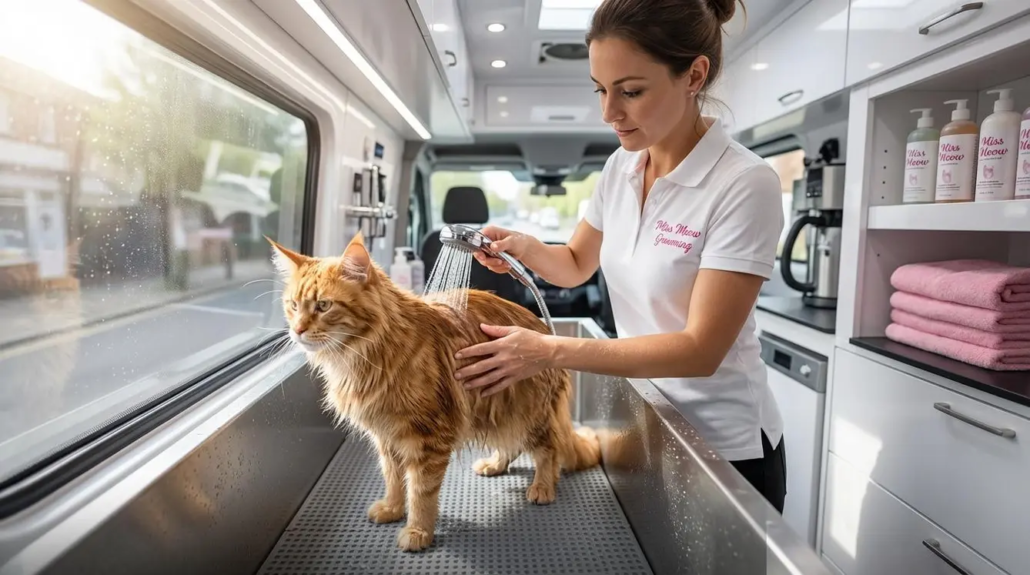
Now, let’s talk about the water itself. The temperature should be lukewarm—think of the temperature you would use for a human infant. Cats have a higher body temperature than we do, but they are also very sensitive to heat. Use a low-pressure stream of water. If you are using a showerhead, keep it close to the cat’s body to minimize the splashing sound. Start from the neck and work your way back toward the tail. Never, under any circumstances, spray water directly into a cat’s face, ears, or nose. This is the fastest way to turn a calm cat into a frantic one.
When it comes to lathering, less is more. High-quality cat grooming services often use diluted shampoos that are easier to rinse out. Massage the soap into the fur using gentle, circular motions. This mimics the feeling of being petted and can actually be quite soothing for many cats. Focus on the areas that need it most, such as the underbelly, the base of the tail, and the paws. During this stage, talk to your cat in a low, rhythmic voice. Your tone acts as an emotional anchor; if you stay calm, they are more likely to stay calm too.
Mastering the Rinse: The Most Critical Step
Believe it or not, the rinse is often where things go sideways. Leftover soap residue can cause skin irritation and will make the fur look dull and greasy once dry. Furthermore, since cats groom themselves by licking, any soap left behind will be ingested. Professionals use the “double rinse” method. Once you think all the soap is gone, rinse one more time. Pay close attention to the “armpits” and the thick fur around the hind legs. If you are feeling overwhelmed by the technicalities of this process, looking into Miss Meow pricing and packages can provide a clear view of how affordable it is to let a professional handle these nuances for you.
During the rinse, keep one hand on the cat at all times. This physical connection provides reassurance. If the cat starts to fidget, stop the water for a moment, offer a treat, and let them reset. Stress-Free Cat Bathing: Secrets from Professional Groomers is not about speed; it is about the quality of the interaction. If you rush, you create tension. If you take your time, you create trust.
Drying: From Sogginess to Fluffiness
Once the water is off, the work is only half done. A wet cat is a cold cat, and their instinct will be to find a dark place to hide and dry off. Your goal is to get them as dry as possible using towels before even considering a hairdryer. Pat the fur rather than rubbing it vigorously, which can cause tangles. Use multiple towels—once one becomes damp, swap it for a fresh, warm one. Some groomers even suggest putting towels in the dryer for a few minutes beforehand to provide extra comfort.
If your cat tolerates noise, you can use a blow dryer on the lowest, coolest setting. However, many cats find the “wind” and the sound terrifying. If this is the case, stick to towel drying and keep the cat in a warm, draft-free room until they are fully dry. For those with long-haired breeds like Persians or Maine Coons, a professional dog grooming van in Dubai—which is fully equipped for feline needs as well—often features high-velocity dryers that are much quieter and more efficient than household hair dryers, making the drying process significantly faster and less stressful.
The Importance of Positive Reinforcement
How a bath ends is just as important as how it begins. The goal of Stress-Free Cat Bathing: Secrets from Professional Groomers is to ensure that the cat doesn’t view the experience as a punishment. Immediately following the bath, offer high-value treats—think tuna, lickable treats, or boiled chicken. Provide plenty of praise and perhaps a favorite toy. You want the “after-bath” memory to be one of luxury and rewards. Over time, your cat may begin to associate the bath with the delicious treats that follow, making them much more cooperative in the future.
It is also helpful to establish a routine. If your cat requires regular bathing due to allergies or coat type, try to do it at the same time of day and in the same location. Predictability breeds confidence. When a cat knows what to expect, the “unknown” factor is removed, and their anxiety levels naturally drop. It is this level of psychological detail that separates a stressful home bath from a professional grooming session.
When Should You Call in the Experts?
While DIY bathing is possible, there are certain scenarios where it is better to step back. If your cat becomes aggressive, shows signs of extreme respiratory distress, or if you have a senior cat with health issues, professional intervention is the safest route. Expert groomers are trained to handle difficult temperaments and can spot underlying skin issues or parasites that an untrained eye might miss. If you find yourself struggling, don’t hesitate to book a pet grooming appointment to ensure your cat gets the care they need without the drama.
Professional groomers also have access to specialized equipment, such as ergonomic tubs and high-quality conditioners that leave the coat silky and manageable for weeks. They understand the anatomy of different breeds and how to handle them without causing joint strain. In a busy city, the convenience of a mobile service cannot be overstated. It eliminates the stress of the car ride, which is often the biggest trigger for feline anxiety. By choosing a professional, you are investing in your cat’s long-term well-allbeing and your own peace of mind.
Final Thoughts on Stress-Free Cat Bathing: Secrets from Professional Groomers
At the end of the day, the journey toward a clean cat is paved with patience and empathy. We must remember that our feline friends aren’t trying to be “difficult”; they are simply reacting to a situation that feels unnatural to them. By implementing the Stress-Free Cat Bathing: Secrets from Professional Groomers shared in this guide—such as proper preparation, non-slip surfaces, controlled water temperature, and positive reinforcement—you can drastically improve the experience for everyone involved.
Whether you decide to take on the challenge at home or enlist the help of a dedicated service, the priority should always be the comfort and safety of the animal. A clean cat is a happy, healthy cat, and with these professional techniques, you can ensure that bath time is no longer a source of dread. Remember, every cat is an individual; what works for one may take a little more time for another. Stay calm, stay consistent, and soon enough, the “battle of the bath” will be a thing of the past.
Summary of Best Practices
To recap, always start with a calm environment and a well-prepared workspace. Ensure you have the right shampoo and that the cat’s nails are trimmed. Use lukewarm water and a gentle touch, avoiding the face entirely. Rinse thoroughly—then rinse again! Dry with warm towels and always, always end with a reward. By following these steps, you are well on your way to mastering the art of the stress-free bath. Happy grooming!


Leave a Reply
Want to join the discussion?Feel free to contribute!