Why You Should Never Shave a Husky’s Coat
Why You Should Never Shave a Husky’s Coat
There is something undeniably majestic about a Siberian Husky. With their striking blue or heterochromatic eyes, wolf-like features, and that incredibly thick, plush fur, they are the poster children for canine beauty. However, that beauty comes with a practical purpose. As the mercury rises during the summer months, many well-meaning pet owners look at their panting Husky and think, “He must be miserable in all that fur. Maybe I should just shave it off.” While this thought comes from a place of love and concern, it is one of the most detrimental things you could do to your dog. Understanding why you should never shave a husky’s coat is crucial for any owner who wants to keep their companion healthy, comfortable, and safe from the elements.
In this comprehensive guide, we are going to dive deep into the biology of the double coat, the mechanics of canine thermoregulation, and the long-term damage that clippers can cause. If you have ever wondered why your groomer looks horrified when you mention a summer “buzz cut” for your Husky, you are about to find out. Let’s be honest: a Husky without its coat isn’t just a funny-looking dog; it’s a dog stripped of its primary defense mechanism against the world.
The Biology of the Double Coat: Nature’s Perfect Insulation
To understand why you should never shave a husky’s coat, you first need to understand what that coat actually is. Unlike many other breeds, Huskies possess a “double coat.” This consists of two distinct layers that work in tandem to protect the dog. The first layer is the undercoat. This is soft, dense, and downy. Its primary job is to trap air against the skin, acting as a powerful insulator. During the winter, this undercoat keeps the dog’s body heat in. In the spring and fall, Huskies go through “coat blowing,” where this undercoat sheds out in massive clumps to prepare for the changing season.
The second layer consists of “guard hairs.” These are longer, coarser hairs that make up the outer layer of the fur. Guard hairs are designed to repel water, block UV rays, and protect the skin from dirt and insects. Think of the undercoat as the insulation in the walls of your house and the guard hairs as the siding and roof. When you shave a Husky, you aren’t just giving them a haircut; you are tearing down the roof and pulling out the insulation of their home. This leaves them completely exposed to whatever the environment throws at them.
Why You Should Never Shave a Husky’s Coat for Temperature Control
The most common reason owners consider shaving their dogs is to help them cool down. It seems logical to us humans—we take off our heavy coats in the summer, so why shouldn’t they? However, dogs do not sweat through their skin the way we do. They primarily regulate their temperature through panting and through the sweat glands in their paw pads. The coat actually serves as a barrier against the heat. That thick layer of fur acts like a thermos; just as a thermos keeps coffee hot, it also keeps ice water cold. By trapping a layer of cooler air near the skin, the double coat prevents the external ambient heat from reaching the dog’s body.
When you remove that coat, you are removing the dog’s built-in air conditioning system. Without the fur to block the sun’s rays and the hot air, the dog’s internal temperature can actually rise much faster. This puts them at a significantly higher risk of heatstroke. In extreme climates, like the heat we experience in the Middle East, maintaining this natural barrier is essential. Many owners who utilize a dog grooming van in Dubai find that professional deshedding is a much safer and more effective way to help their pets stay cool than reaching for the clippers.
The Danger of Sunburn and Skin Cancer
Underneath all that thick fur, a Husky’s skin is remarkably pale and sensitive. Because they evolved in the Arctic, they never needed high levels of melanin to protect their skin from the sun; their fur did all the work. When you shave a Husky, you expose that virgin skin to direct ultraviolet (UV) radiation. This isn’t just uncomfortable; it’s dangerous. A shaved Husky can suffer from painful sunburns within minutes of being outdoors.
Repeated sun exposure on a shaved dog significantly increases the risk of developing various types of skin cancer, including squamous cell carcinoma. This is why you should never shave a husky’s coat—you are literally stripping away their sunscreen. Furthermore, without the guard hairs to act as a physical shield, their skin becomes much more susceptible to scratches, bites, and abrasions. In fact, professional groomers at Missmeow Grooming often emphasize that the coat is the first line of defense against both the climate and physical injury.
Permanent Damage to the Fur: The Nightmare of Clipper Alopecia
One of the most heartbreaking consequences of shaving a double-coated dog is that the fur may never grow back the same way. This condition is often referred to as “clipper alopecia” or “post-clipping alopecia.” Because the undercoat and the guard hairs grow at different rates and have different life cycles, shaving them down to the same level disrupts the natural growth pattern. The undercoat often grows back quickly, but it becomes fuzzy, Velcro-like, and prone to matting. The guard hairs, on the other hand, may take years to return, or they may grow back in patches.
A Husky that has been shaved often ends up with a coat that feels like wool. This damaged coat is no longer effective at repelling water or insulating the dog. It traps dirt, loses its shine, and becomes a nightmare to maintain. Instead of a sleek, self-cleaning dog, you end up with a pet that requires constant intervention just to prevent painful mats. If you’re concerned about the cost of maintaining such a damaged coat, checking Miss Meow pricing and packages for regular maintenance is a much better long-term investment than dealing with the fallout of a shaved coat.
The Role of Guard Hairs in Hydration and Hygiene
Guard hairs aren’t just for show. They are naturally oily and designed to shed water and dirt. Have you ever noticed how a Husky can roll in the mud, dry off, and then suddenly look clean again after a quick shake? That is the guard hairs at work. When you shave the dog, you remove these protective tips. The resulting regrowth is often absorbent. Instead of the mud sliding off, it gets trapped in the fuzzy undercoat, leading to a smelly dog and a messy house.
Furthermore, these guard hairs help protect the dog from biting insects. Mosquitoes, flies, and ticks have a much harder time reaching the skin through a dense double coat. Once that coat is gone, your Husky becomes a walking buffet for local pests. This increases the risk of skin infections and blood-borne diseases. It’s just one more reason why you should never shave a husky’s coat—the aesthetic “fix” creates a mountain of biological problems.
Why You Should Never Shave a Husky’s Coat: The Risk of Heatstroke
We touched on this briefly, but it bears repeating: shaving a Husky does not prevent heatstroke; it invites it. Heatstroke in dogs is a life-threatening emergency. Symptoms include excessive panting, bright red gums, lethargy, and vomiting. When the insulating fur is gone, the dog’s core temperature can spike dangerously high because the sun is hitting the skin directly. Imagine standing in the desert sun in a tank top versus standing under a well-ventilated, insulated canopy. The canopy is the coat.
For those living in urban environments, the pavement and surrounding buildings radiate heat. If you are worried about your pet’s comfort during the summer, the best solution is to book a pet grooming appointment for a deep deshedding treatment. This process removes the dead, trapped undercoat that *does* hold in heat, while leaving the protective guard hairs intact. This allows air to circulate through the fur and reach the skin, which is exactly how the Husky’s cooling system was designed to function.
Common Myths About Shaving Huskies
There are several myths that persist in the pet world, leading owners to make the wrong choice. Let’s debunk a few of them here:
Myth 1: “My dog will stop shedding if I shave him.”
False. The dog will still shed; the hairs will just be shorter and sharper. Instead of soft tufts of fur, you will find tiny, prickly hairs embedded in your furniture and clothes. Shaving does not stop the biological process of hair loss.
Myth 2: “He looks so much happier after he’s shaved!”
While a dog might feel lighter or enjoy the attention after a grooming session, they are not “happier” being exposed to the sun and insects. Often, dogs feel vulnerable after a shave and may exhibit changes in behavior or anxiety because their natural “armor” is gone.
Myth 3: “It will grow back fine.”
As discussed, this is a huge gamble. There is no guarantee a double coat will ever return to its original glory. For many Huskies, the damage is permanent, leading to a lifetime of skin issues and poor temperature regulation.
Better Alternatives to Shaving
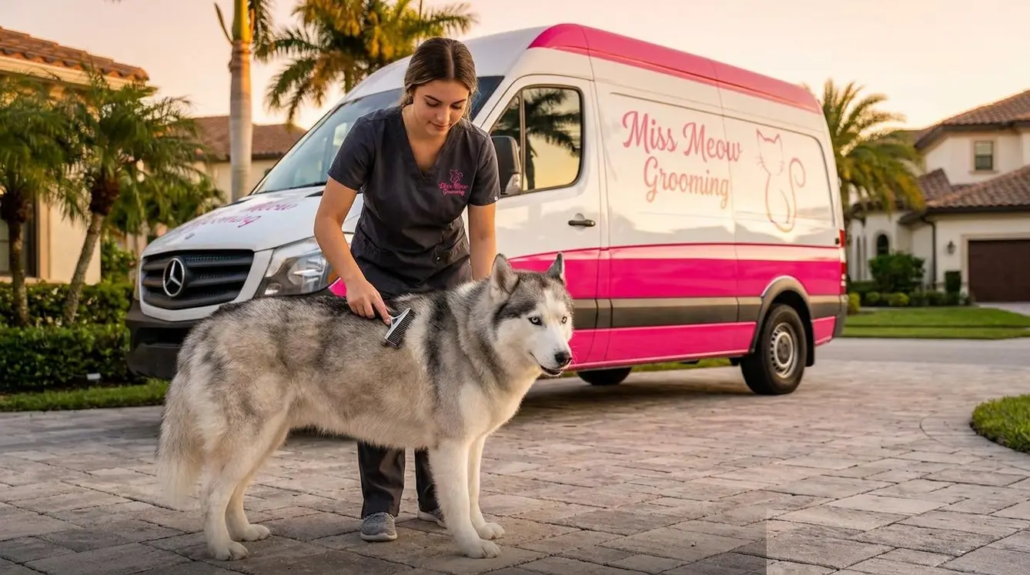
If you shouldn’t shave them, what should you do? Proper grooming is the key. Since Huskies are high-maintenance in the fur department, they require consistent care. A thorough “blow out” using a high-velocity dryer is the best way to remove the dead undercoat. This opens up the coat and allows the skin to breathe. Regular brushing with an undercoat rake or a slicker brush is also essential.
For those who also have felines at home, you might already be familiar with cat grooming services, but dog grooming is a different beast entirely when it comes to double-coated breeds. A professional groomer knows how to work through the layers without damaging the structure of the fur. They can provide “sanitary trims” or trim the fur between the paw pads to help with traction and cooling, which are much safer alternatives to a full body shave.
When is Shaving Actually Necessary?
Is there ever a time when you should shave a Husky? Yes, but only for medical reasons. If a dog has severe skin infections, hot spots that require topical treatment, or if they are undergoing surgery, a veterinarian may need to shave a specific area. Additionally, if a Husky has been severely neglected and their coat is a solid mass of mats that cannot be brushed out without causing the dog extreme pain, “starting over” may be the only humane option. However, these are rare exceptions and should always be handled by a professional.
Outside of these extreme medical circumstances, the answer to “should I shave my Husky” is always a resounding no. The risks far outweigh any perceived benefits. Protecting the coat is an essential part of being a responsible Husky owner.
The Importance of Professional Grooming
Many owners feel overwhelmed by the sheer volume of fur a Husky can produce. This is where professional services come in. If you find yourself struggling to keep up with the shedding, don’t reach for the clippers—reach for your phone. Utilizing mobile pet grooming in Dubai can bring professional-grade equipment right to your doorstep. This is especially helpful for Huskies who might be stressed by a traditional salon environment.
A professional groomer has the tools to perform a deep deshedding that most owners simply can’t do at home. They use specialized shampoos and conditioners that help loosen the dead undercoat and high-powered dryers that blast away the fur that would otherwise be trapped against the dog’s skin. This is the real secret to keeping a Husky cool and comfortable during the summer.
Final Thoughts: Respect the Fur
At the end of the day, your Husky’s coat is a miracle of biological engineering. It is a dual-purpose tool that keeps them warm in the depths of winter and cool during the height of summer. It protects them from the sun, shields them from the rain, and guards them against the biting insects of the world. Why you should never shave a husky’s coat comes down to respect for the animal’s natural design.
By choosing proper grooming over shaving, you are ensuring that your Husky remains healthy, protected, and beautiful for years to come. It might mean a bit more vacuuming and a few more grooming appointments, but the comfort and safety of your four-legged friend are well worth the effort. Let their coat do what it was meant to do, and your Husky will thank you with a long, happy, and heatstroke-free life.

