Grooming Senior Pets: Safety Tips and Special Care
Grooming Senior Pets: Safety Tips and Special Care
As our beloved companions enter their golden years, their needs begin to shift in ways that aren’t always immediately obvious. We notice the graying muzzle and the slower pace on morning walks, but we often overlook how these physiological changes affect their grooming requirements. Grooming Senior Pets: Safety Tips and Special Care is not just about keeping your dog or cat looking sharp; it is a fundamental aspect of geriatric veterinary care that directly impacts their quality of life, comfort, and even their mobility. Aging brings about thinner skin, stiffer joints, and sometimes a bit of cognitive confusion, all of which require a more compassionate and strategic approach to hygiene.
Think about it: a ten-year-old Great Dane or a fifteen-year-old Siamese cat has vastly different physical thresholds than a bouncy puppy or a curious kitten. For an older animal, a simple bath can feel like a marathon, and standing on a hard grooming table for an hour might result in days of joint soreness. To ensure our senior pets remain happy and healthy, we must adapt our routines. In this comprehensive guide, we will explore the nuances of Grooming Senior Pets: Safety Tips and Special Care, helping you navigate the delicate balance between cleanliness and comfort.
Understanding the Physical Changes in Aging Pets
Before diving into the “how-to,” it is essential to understand the “why.” Senior pets undergo significant biological transformations. Their skin loses elasticity and becomes thinner, making them more prone to nicks, scratches, and irritation. Furthermore, the natural oils that keep their coats shiny tend to decrease, leading to dry, brittle fur and flaky skin. This dryness can cause intense itching, which, when paired with a weakened immune system, can quickly lead to hot spots or secondary infections.
Arthritis and degenerative joint diseases are perhaps the most common hurdles when discussing Grooming Senior Pets: Safety Tips and Special Care. When a pet has stiff hips or sore elbows, the act of lifting a leg for a nail trim or standing still while being brushed can be genuinely painful. Moreover, many older pets develop “lumps and bumps”—lipomas, cysts, or skin tags. A groomer who isn’t aware of these can accidentally catch them with a comb or clipper blade, causing unnecessary pain and bleeding. Understanding these vulnerabilities is the first step toward a safer grooming experience.
Creating a Stress-Free Environment for Senior Grooming
For many older animals, sensory decline—such as failing eyesight or hearing—can make the grooming environment feel unpredictable and frightening. If they can’t see the brush coming or hear your soothing voice as clearly, they may startle easily. To combat this, always maintain physical contact. Keeping a hand on their shoulder or back lets them know where you are at all times, providing a sense of security that words might no longer offer.
Temperature regulation is another critical factor. Senior pets struggle to regulate their body temperature, meaning they get cold much faster when wet and can overheat rapidly under a high-velocity dryer. When focusing on Grooming Senior Pets: Safety Tips and Special Care, always ensure the room is warm, the water is lukewarm (never hot), and you have plenty of thick, absorbent towels ready to dry them off immediately. Let’s be honest: a shivering senior pet is a stressed senior pet, and stress is the enemy of a successful grooming session.
The Importance of Professional Assistance and Mobility
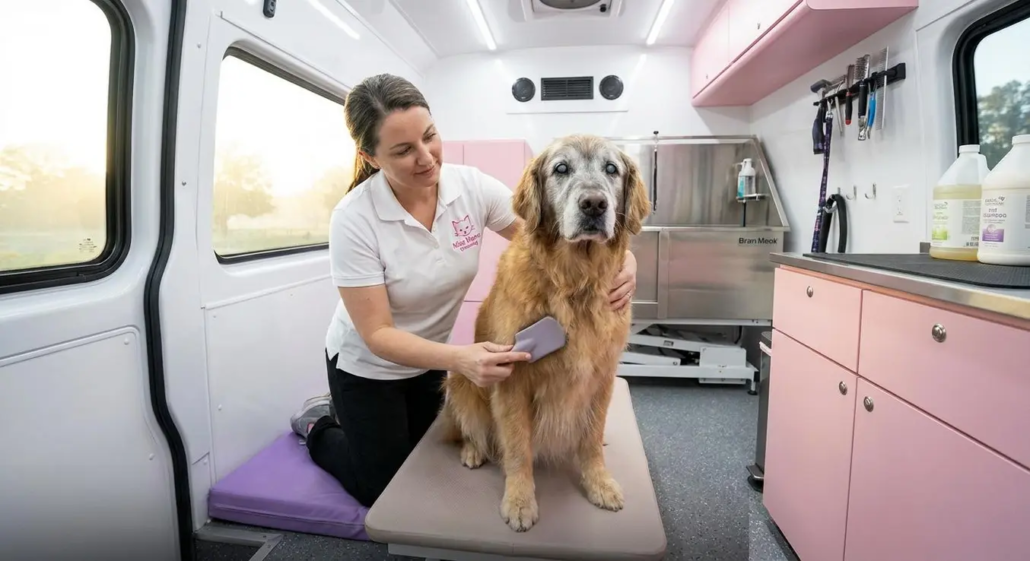
Sometimes, the best thing you can do for an aging pet is to bring the grooming to them. The stress of a car ride and the loud, bustling environment of a traditional pet salon can be overwhelming for a dog with dementia or a cat with chronic anxiety. This is why many owners are turning to specialized services. Utilizing mobile pet grooming in Dubai allows your pet to receive professional care right at your doorstep, eliminating the trauma of transport and the long wait times in a cage.
Professional groomers who specialize in senior care, such as those at Missmeow Grooming, are trained to handle animals with limited mobility. They use specialized equipment, such as slings to support a dog’s weight or non-slip mats to prevent paws from sliding. These small adjustments make a world of difference. When you look at Miss Meow pricing and packages, you are not just paying for a haircut; you are investing in the safety and specialized handling that a senior animal requires to stay healthy without the physical toll of a standard grooming session.
Grooming Senior Pets: Safety Tips and Special Care for Skin and Coat
When brushing an older pet, the mantra should always be “gentle and thorough.” Instead of using harsh slicker brushes that might scratch thinning skin, opt for soft-bristled brushes or silicone grooming mitts. These tools stimulate blood flow and distribute natural oils without causing pain. While grooming, use your hands to “map” your pet’s body. Feel for new growths, changes in skin texture, or areas that seem tender to the touch. This proactive approach often leads to the early detection of issues that can be reported to your veterinarian.
Matting is a particular concern for senior cats who may have stopped grooming themselves due to dental pain or arthritis. If a cat cannot reach their back or hindquarters, the fur will quickly felt into painful mats. However, cat grooming services for seniors must be handled with extreme caution, as feline skin is notoriously paper-thin. In some cases, a “sanitary clip” or a “belly shave” is more humane than trying to brush out deep mats that pull on the skin.
Nail Care and Paw Health in Senior Years
One of the most overlooked aspects of Grooming Senior Pets: Safety Tips and Special Care is nail maintenance. As pets age and become less active, they don’t wear their nails down naturally on pavement or hard surfaces. Long nails are more than just a cosmetic issue; they can actually alter the way a pet walks. For an arthritic dog, long nails force the paws to splay or tilt, putting additional strain on already painful joints. In extreme cases, the nails can grow in a circle and pierce the paw pad, leading to infection.
Trimming a senior pet’s nails requires patience. Their quicks (the blood vessel inside the nail) may be longer, and their paws may be sensitive due to nerve changes. If your pet is too stiff to have their paws lifted high, try trimming them while they are lying down. Using a grinder instead of a clipper can also be less jarring for pets who dislike the “crunch” sensation of traditional clippers. If you find this task too daunting, it is always a good idea to book a pet grooming appointment specifically for a nail trim and paw pad cleaning to ensure it’s done safely.
Bathing Techniques: Safety First
Bathing a senior pet requires a complete shift in technique. Gone are the days of hoisting a heavy dog into a high tub. If possible, use a walk-in shower or a low-profile basin. Non-slip mats are non-negotiable; if an old dog slips and tweaks a hip during a bath, the recovery can be long and painful. Focus on the essentials—the “undercarriage,” the paws, and the area under the tail—rather than a full, deep scrub every time. Many times, a waterless shampoo or grooming wipes can suffice for a senior pet who finds water too stressful.
For those with larger breeds, a dog grooming van in Dubai provides a controlled environment where the groomer can use hydraulic tables that lower to the floor, allowing the dog to step on easily. This minimizes the risk of injury for both the pet and the groomer. During the bath, avoid spraying water directly in the face, as this can cause panic or aspiration in pets with respiratory issues. Instead, use a soft washcloth to gently clean around the eyes and snout.
Addressing Dental and Ear Hygiene
Grooming Senior Pets: Safety Tips and Special Care extends beyond the fur. Dental health is a major concern for aging animals. Periodontal disease can lead to systemic infections that affect the heart and kidneys. While professional dental cleaning under anesthesia is sometimes necessary, regular at-home brushing with pet-safe toothpaste can slow the progression of plaque. Similarly, ears should be checked weekly. Senior pets can develop wax buildup or infections more easily as their immune systems flag. A gentle wipe with a vet-approved cleanser can prevent a minor irritation from becoming a painful middle-ear infection.
Managing Cognitive Issues and Anxiety During Grooming
It is not uncommon for senior pets to suffer from Canine Cognitive Dysfunction (CCD) or feline senility. This can manifest as increased vocalization, pacing, or sudden aggression during tasks they used to tolerate. When Grooming Senior Pets: Safety Tips and Special Care involves a pet with cognitive decline, “less is more.” You might need to break the grooming session into several 10-minute blocks over two or three days rather than trying to finish everything at once. Keeping the sessions short prevents the pet from reaching a state of “sensory overload.”
Pheromone sprays, calming music, or even a specialized “happy hoodie” (a snug fabric band that covers the ears to muffle noise) can be incredibly helpful. If your pet’s anxiety is severe, consult your veterinarian about mild sedation or anti-anxiety medication to make the grooming process safer. There is no shame in seeking medical help to ensure your pet’s comfort; in fact, it is a hallmark of responsible senior care.
The Role of Nutrition in Coat Health
While external grooming is vital, we cannot ignore the internal factors. A senior pet’s coat is a reflection of their internal health. Incorporating Omega-3 fatty acids, such as fish oil, into their diet can significantly improve skin elasticity and coat luster. These supplements also have the added benefit of supporting joint health, which makes the physical act of being groomed much easier for them. Always discuss dietary changes with your vet, but remember that Grooming Senior Pets: Safety Tips and Special Care is a holistic endeavor that starts from the inside out.
Conclusion: The Reward of Compassionate Care
Grooming a senior pet is an act of love. It requires us to slow down, to listen to the subtle cues our pets are giving us, and to prioritize their dignity over their appearance. While a perfectly coiffed “show cut” might have been the goal in their youth, the goal for a senior is simply to be clean, comfortable, and pain-free. By following these safety tips and providing special care, you are not just maintaining their hygiene; you are strengthening the bond you share in their final, most precious years.
Whether you choose to handle these tasks yourself or enlist the help of a professional service like Missmeow Grooming, remember that every brush stroke is an opportunity to check in on your friend’s well-being. By staying vigilant about their changing needs—from the temperature of the bathwater to the length of their nails—you ensure that their sunset years are spent in comfort. Grooming Senior Pets: Safety Tips and Special Care is more than a checklist; it’s a commitment to the animal that has given you a lifetime of loyalty.

