The Best Essential Oils Safe for Pet Grooming
The Best Essential Oils Safe for Pet Grooming
We have all been there: your furry friend returns from a romp in the mud, or perhaps they have developed that distinct “doggy” smell that seems to permeate every fabric in your home. Naturally, your first instinct might be to reach for a bottle of something that smells like a spa—a touch of lavender or a hint of citrus. However, when it comes to our pets, the world of scent is far more complex than it is for humans. Essential oils are incredibly potent, and while they offer a myriad of therapeutic benefits, they can also be dangerous if not used with caution. Finding the best essential oils safe for pet grooming is not just about choosing a pleasant fragrance; it is about understanding the delicate biology of our four-legged companions.
Think of a dog’s nose for a moment. While humans have about 5 million scent receptors, a dog can have up to 300 million. Their sense of smell is roughly 10,000 to 100,000 times more acute than ours. Imagine walking into a room filled with a thousand scented candles all burning at once—that is often how a concentrated essential oil feels to a pet. Consequently, the approach to holistic pet care must be rooted in safety, dilution, and a deep respect for their sensory experience. In this guide, we will explore how to navigate this aromatic landscape to enhance your pet’s well-being without compromising their health.
Understanding the Science of the Best Essential Oils Safe for Pet Grooming
Before we dive into the specific oils, we must address the “why” and “how” of pet aromatherapy. Essential oils are volatile organic compounds extracted from plants. They are lipid-soluble, meaning they are easily absorbed through the skin and enter the bloodstream rapidly. For a creature with a much smaller body mass and a different metabolic pathway—particularly cats, who lack certain liver enzymes (glucuronyl transferase) to break down many compounds—this can lead to toxicity if the wrong oils are used.
When we talk about the best essential oils safe for pet grooming, we are looking for oils that provide emotional calming, skin-soothing properties, or natural pest deterrence without overwhelming the animal’s system. For instance, a nervous rescue dog might benefit from the grounding effects of valerian, while a pup with itchy, seasonal allergies might find relief in a highly diluted chamomile wash. However, the golden rule is always dilution. A single drop of essential oil should typically be diluted in at least 50 drops of a carrier oil, such as fractionated coconut oil or sweet almond oil, before it ever touches their skin.
Furthermore, it is important to realize that the environment plays a huge role. If you are looking for mobile pet grooming in Dubai, you will notice that professional groomers who utilize aromatherapy do so in well-ventilated spaces. This ensures that the pet always has an “exit” from the scent if it becomes too much for them. Aromatherapy should be an invitation to relax, not a forced sensory overload.
The Top Recommendations for the Best Essential Oils Safe for Pet Grooming
Let’s get into the specifics. Not all oils are created equal, and when you are scanning the shelves, you want to look for therapeutic-grade, pure oils. Here are the heavy hitters that are widely considered safe and effective for pets when used correctly.
Lavender (Lavandula angustifolia)
Lavender is perhaps the most famous of all essential oils, and for good reason. It is the “Swiss Army knife” of aromatherapy. For grooming, it is excellent for calming anxious pets who dread the bathtub or the sound of the clippers. It has mild analgesic and antiseptic properties, making it a gentle choice for minor skin irritations. Let’s be honest, we all feel a little better after a whiff of lavender, and the same applies to your dog—provided it is the true *Lavandula angustifolia* and not the synthetic fragrance oil often found in cheap shampoos.
Roman Chamomile
If lavender is the king of calm, chamomile is the queen of comfort. This oil is incredibly gentle and is often recommended for pets with sensitive skin or those prone to “hot spots.” It has a sweet, apple-like aroma that is less sharp than lavender. When integrated into cat grooming services, chamomile can help soothe the frantic energy many felines exhibit during grooming, though it must be used even more sparingly with cats than with dogs.
Cedarwood (Cedrus atlantica)
Cedarwood is a fantastic addition to the list of the best essential oils safe for pet grooming because of its practical benefits. It is a natural repellent for fleas and ticks. Beyond its pest-control capabilities, it has a grounding, woody scent that can help stabilize a hyperactive dog. It also acts as an skin tonic, helping to clear up flaky skin. It is a much safer alternative to the harsh chemicals found in many commercial flea powders.
Frankincense
Often referred to as the “king of oils,” Frankincense is highly valued in pet care for its ability to support the immune system and promote cellular health. It is particularly useful for older pets who might have stiff joints or those recovering from a stressful event. It has a warm, spicy scent that is deeply grounding. In many professional settings, including the specialized dog grooming van in Dubai setups, Frankincense is used to create a serene atmosphere that mimics a natural, outdoor environment.
How to Safely Use the Best Essential Oils Safe for Pet Grooming
Knowing which oils are safe is only half the battle; knowing how to apply them is where the real skill lies. You should never apply neat (undiluted) essential oils directly to your pet’s fur or skin. The most common methods of application during grooming include water-based sprays, oil-based massages, and passive diffusion.
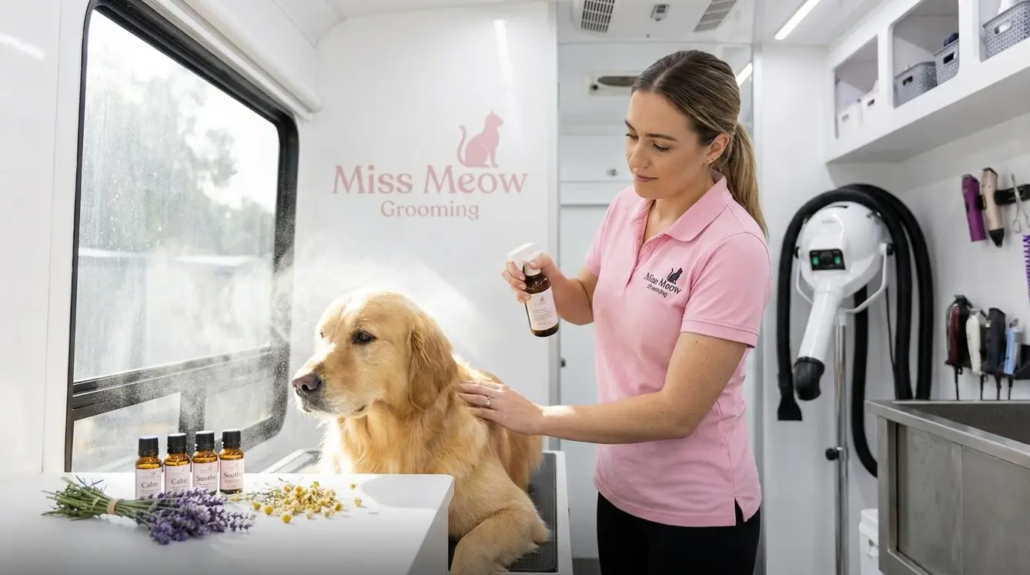
For a DIY grooming spray, you can mix 5 to 10 drops of a safe oil like Lavender or Cedarwood with 8 ounces of distilled water and a splash of witch hazel (to help the oil and water mix). Mist this lightly over your dog’s coat before brushing. This helps the brush glide through tangles while distributing the scent and the therapeutic benefits. Avoid the face, especially the eyes and nose, as these areas are highly sensitive.
On the other hand, if you are looking for a more professional touch, Missmeow Grooming incorporates high-quality products that understand these delicate balances. Professionals know that the “less is more” approach is vital. They use pre-formulated, pet-safe shampoos and conditioners that have already undergone rigorous testing to ensure the concentrations are exactly where they need to be for safety and efficacy.
Common Mistakes and Oils to Avoid
In our quest for the best essential oils safe for pet grooming, we must also look at the darker side of aromatherapy. There are several popular oils that are “hot” or toxic to pets. Tea tree oil (Melaleuca), for example, is often touted for its antifungal properties in humans, but it can be highly toxic to dogs and cats if used in high concentrations. Other oils to avoid include Peppermint, Wintergreen, Pine, Cinnamon, and Citrus oils (like Lemon or Orange), which can cause skin irritation or even liver failure if ingested or absorbed in large amounts.
Another common mistake is ignoring the pet’s reaction. If you apply an oil and your pet starts sneezing, pacing, rubbing their face on the carpet, or acting lethargic, you must wash the oil off immediately with a mild, scent-free dish soap (which breaks down the oils better than regular shampoo). Always let your pet “sniff” the bottle from a distance before use. If they turn their head away or leave the room, they are telling you that they don’t want or need that specific oil. Respect their autonomy!
Integrating Aromatherapy into Professional Grooming
Many pet owners are now choosing professional services that prioritize a holistic experience. It’s not just about the haircut anymore; it’s about the emotional state of the animal. This is where modern services excel. When you look into Miss Meow pricing and packages, you will find that the focus is on a stress-free environment where the pet’s comfort is the top priority. By using the best essential oils safe for pet grooming in a controlled, professional manner, groomers can transform a potentially traumatic experience into a spa day.
Professional groomers also have the advantage of specialized equipment. High-velocity dryers can sometimes be scary, but when the air is lightly scented with a calming oil, it can help the pet stay focused and relaxed. This level of care is what differentiates a standard grooming session from a premium wellness experience. Whether it is a calming lavender bath or a cedarwood-infused brush-out, the goal is a happy, healthy, and great-smelling pet.
The Role of Carrier Oils in Pet Grooming
We cannot discuss the best essential oils safe for pet grooming without giving credit to carrier oils. These are the unsung heroes that make aromatherapy safe. For pets, the best options are usually fractionated coconut oil, jojoba oil, or aloe vera jelly. These substances “carry” the essential oil into the skin at a controlled rate, preventing irritation.
Jojoba oil is particularly interesting because its chemical structure is very similar to the natural sebum produced by a dog’s skin. This makes it an excellent conditioner for the coat. If your pet has dry, cracked paw pads, a mixture of jojoba oil and a single drop of Frankincense can work wonders for healing and protection. It creates a breathable barrier that keeps moisture in and irritants out. Always remember: the carrier oil should make up 98-99% of the mixture.
Creating a Calming Grooming Ritual at Home
If you prefer to handle grooming at home, you can still utilize the best essential oils safe for pet grooming to make the process easier. Start by diffusing a calming oil like Valerian or Lavender in the room for 15 minutes before you even bring the brush out. This sets the tone for the environment. Use a soft voice, offer treats, and move slowly.
As you brush, you might find that your pet becomes more receptive to the touch. This “bonding time” is crucial. By associating the pleasant, subtle scent of safe essential oils with the positive attention of grooming, you are conditioning your pet to enjoy the process. Over time, the mere scent of the oil will act as a signal to your pet that it is time to relax and be pampered.
Conclusion: A Holistic Approach to Pet Care
Ultimately, the journey to finding the best essential oils safe for pet grooming is about more than just scent—it is about a deeper connection with our pets. It is about choosing products and methods that honor their unique physiology and their emotional needs. Whether you are dealing with a “zoomie-prone” puppy or a senior cat who just needs a bit of comfort, aromatherapy offers a natural, effective tool when used with wisdom and care.
Remember that while DIY care is wonderful, there is no substitute for professional expertise, especially for pets with complex needs or those who are particularly anxious. If you are ready to give your pet the ultimate pampering session that incorporates safety, skill, and a touch of aromatic luxury, it might be time to book a pet grooming appointment with a team that understands the importance of a holistic approach. Your pet deserves to feel as good as they look, and with the right essential oils, they certainly will.
By keeping safety at the forefront and staying informed about the best essential oils safe for pet grooming, you are taking a significant step toward a happier, healthier life for your companion. The world of aromatherapy is vast and beautiful; let’s explore it one careful drop at a time.

